Most SaaS teams default to AWS, Google Cloud, or Azure for the promise of infinite scale and managed convenience. Yet, as your infrastructure footprint grows, the cloud bill often shifts from a predictable operating expense to a structural drag on profitability. This article identifies the specific financial and technical thresholds where the "cloud-first" mandate fails, helping you determine when to transition to bare metal or hybrid architectures to regain control over your margins and performance. By analyzing the intersection of compute utilization, latency variance, and egress economics, you will learn how to identify the precise moment your infrastructure strategy should pivot from managed abstraction to hardware ownership.
The Cost Crossover: When Cloud Bills Exceed Dedicated Hosting
Cloud pricing is a premium for elasticity, not raw compute. While a $200/month instance is perfect for an MVP, steady-state workloads—databases, API clusters, and background workers running at 60-80% utilization—are notoriously expensive in the cloud. Even with heavy Reserved Instance discounts, cloud compute often commands a 2-4x price premium over equivalent bare metal hardware. The crossover point typically arrives when your monthly cloud compute spend crosses the $10,000 threshold. Below this, the operational burden of managing your own hardware—including rack space, power, and physical maintenance—outweighs the savings. Above this, you are effectively paying a "convenience tax" that scales linearly with your success.
Micro-example: A SaaS platform running eight c6g.2xlarge instances on AWS spends roughly $8,700/month on-demand. Migrating this workload to high-performance bare metal from providers like Hetzner or OVHcloud can drop that cost below $2,500, even after accounting for redundant hardware and spare capacity.
Decision rule: If your committed compute spend exceeds $10,000/month and your utilization remains consistently above 50%, request a bare metal quote. If the savings exceed 50%, the cloud premium is likely only justified if you rely heavily on managed services like RDS or automated cross-region failover.
Performance Predictability and the Noisy Neighbor Problem
Cloud instances share physical hardware, meaning your performance is subject to the hypervisor’s resource allocation and the activity of other tenants. While usually negligible, this shared-tenancy model introduces "jitter"—unpredictable spikes in latency that are nearly impossible to debug in standard monitoring. For latency-sensitive SaaS products, such as real-time collaboration engines or high-frequency payment gateways, a P99 latency spike caused by a neighbor’s batch job saturating the NVMe bus can violate your SLAs and degrade user experience. Dedicated servers eliminate this by granting you exclusive access to the CPU, L3 cache, and storage I/O, removing the hypervisor tax entirely.
Micro-example: An analytics SaaS moved their ClickHouse cluster from cloud VMs to bare metal with local NVMe storage. By removing the hypervisor’s interference with storage I/O, their P95 query latency dropped from 1.2 seconds to 340 milliseconds, despite the underlying CPU clock speeds being identical.
Decision rule: If you find yourself implementing complex caching layers, connection pools, or aggressive retry logic solely to mask infrastructure variance, you are fighting the cloud’s shared-tenancy model. Measure your P99 and P99.5 latency; if these metrics fluctuate wildly without code changes, your infrastructure is the bottleneck.
Data Egress and the Hidden Cost of Connectivity
Cloud providers often subsidize compute costs while charging exorbitant fees for data egress—the cost of moving data out of their network to the public internet or other regions. For data-intensive SaaS products like video processing, log management, or large-scale file synchronization, egress costs can quickly become the largest line item on your invoice. Unlike compute, which can be reserved, egress is a variable cost that grows directly with your user base. Moving to a colocation facility or a provider with unmetered bandwidth can decouple your growth from your connectivity costs, effectively turning a variable expense into a fixed one.
Micro-example: A video-transcoding SaaS was paying $15,000 monthly in AWS egress fees alone. By migrating their primary storage and distribution nodes to a dedicated provider with a flat-rate bandwidth agreement, they reduced their monthly connectivity bill to $1,200, representing a 92% reduction in overhead.
Decision rule: If your egress costs exceed 15% of your total monthly cloud bill, you are subsidizing your provider's network infrastructure. Evaluate moving high-bandwidth workloads to a dedicated provider or a CDN-heavy architecture that keeps data closer to the edge.
Operational Overhead vs. Infrastructure Control
The primary argument for cloud-first is the reduction of "undifferentiated heavy lifting"—the time spent patching kernels, managing rack power, or replacing failed drives. However, as your team grows, the abstraction layer often becomes a barrier to optimization. When you are locked into a proprietary cloud API, you lose the ability to tune the kernel for specific database workloads or implement custom hardware acceleration. Transitioning to bare metal requires a shift toward Infrastructure as Code (IaC) using tools like Terraform or Ansible to manage physical nodes as if they were virtual ones. The goal is to automate the hardware lifecycle so that the operational burden of physical servers is no higher than that of virtual machines.
Micro-example: A mid-sized SaaS team transitioned to bare metal by using Equinix Metal. By treating their physical servers as ephemeral resources managed via API, they maintained the speed of cloud provisioning while gaining the performance benefits of dedicated hardware, keeping their DevOps team size constant.
Decision rule: If your DevOps team spends more time fighting cloud-specific limitations—such as IOPS throttling or network interface limits—than they do building product features, the "managed" benefit of the cloud has become a net negative.
The Hybrid Path: A Pragmatic Transition Strategy
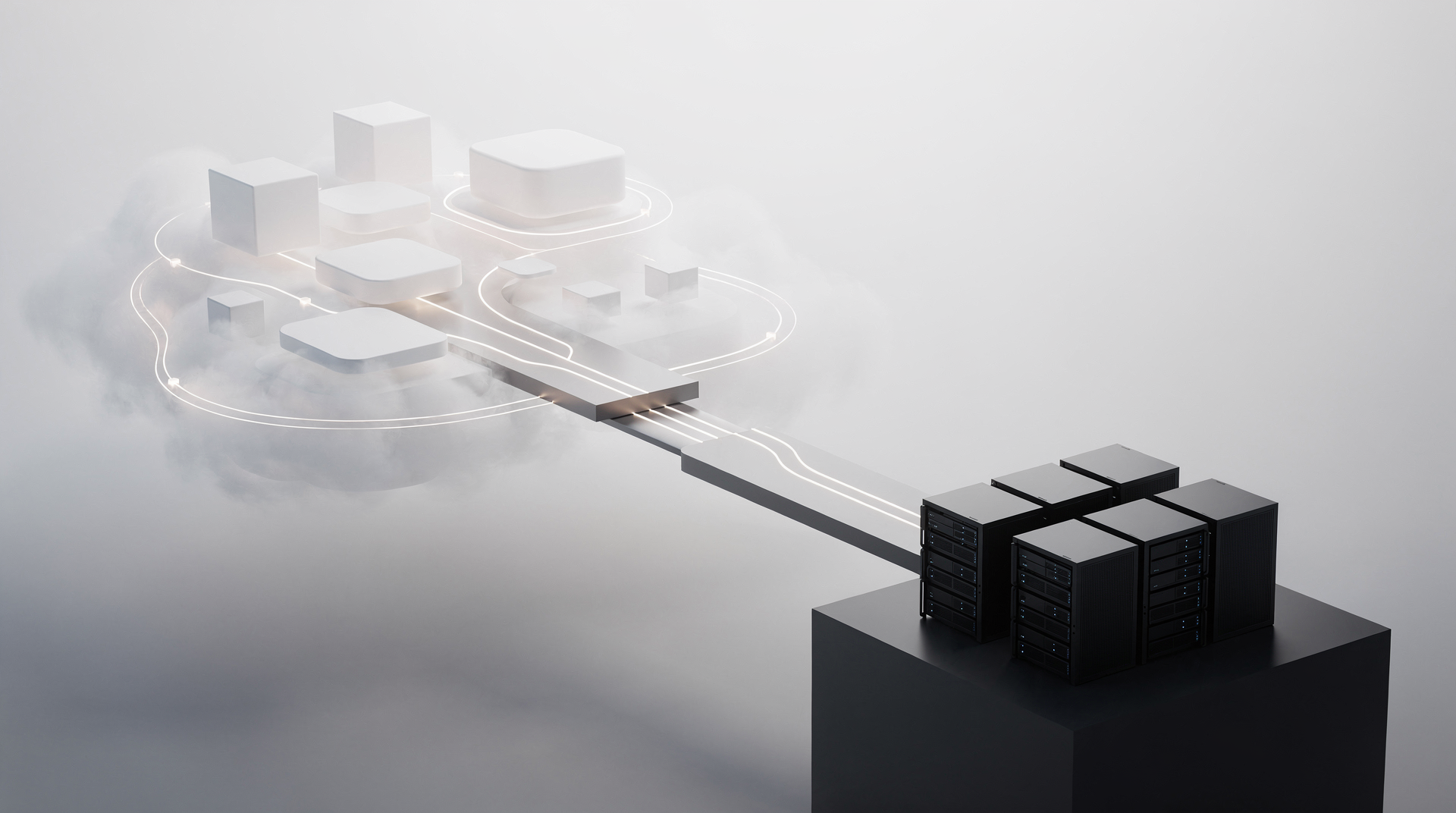
You do not need to choose between "all-in" cloud and "all-in" bare metal. A hybrid architecture allows you to keep the elastic, managed services of the cloud for your front-end and bursty microservices, while moving your "heavy lifters"—databases, large-scale storage, and high-throughput background workers—to dedicated hardware. This approach minimizes risk by allowing you to migrate components incrementally. By establishing a high-speed, private interconnect between your cloud VPC and your dedicated racks, you can maintain low-latency communication between the two environments, effectively creating a single, unified infrastructure footprint that optimizes for both cost and flexibility.
Micro-example: A growing e-commerce platform kept their web servers on AWS for auto-scaling during traffic spikes but moved their primary PostgreSQL database and Redis cache to dedicated servers in a nearby data center. This reduced their database latency by 40% and cut their monthly infrastructure bill by nearly 30%.
Decision rule: If you are hesitant to leave the cloud entirely, start by migrating your most stable, resource-heavy workload to dedicated hardware. Use a private cross-connect to link the environments and measure the impact on both your monthly bill and your application's performance metrics.
Conclusion
The transition from cloud-native to bare metal is not a step backward; it is a sign of maturity. As your SaaS platform scales, the same infrastructure that enabled your rapid growth will eventually become a constraint on your margins and your performance. By recognizing the $10,000 spend threshold, identifying jitter caused by noisy neighbors, and auditing your egress costs, you can make an informed decision about when to reclaim control of your hardware. Whether you choose a full migration or a hybrid approach, the objective remains the same: ensuring that your infrastructure supports your business model rather than dictating it. Start by auditing your current utilization and egress patterns today; the savings you find may be the capital you need to fuel your next phase of growth.