OpenClaw: How Modular Robotic Grippers Work and When to Use Them
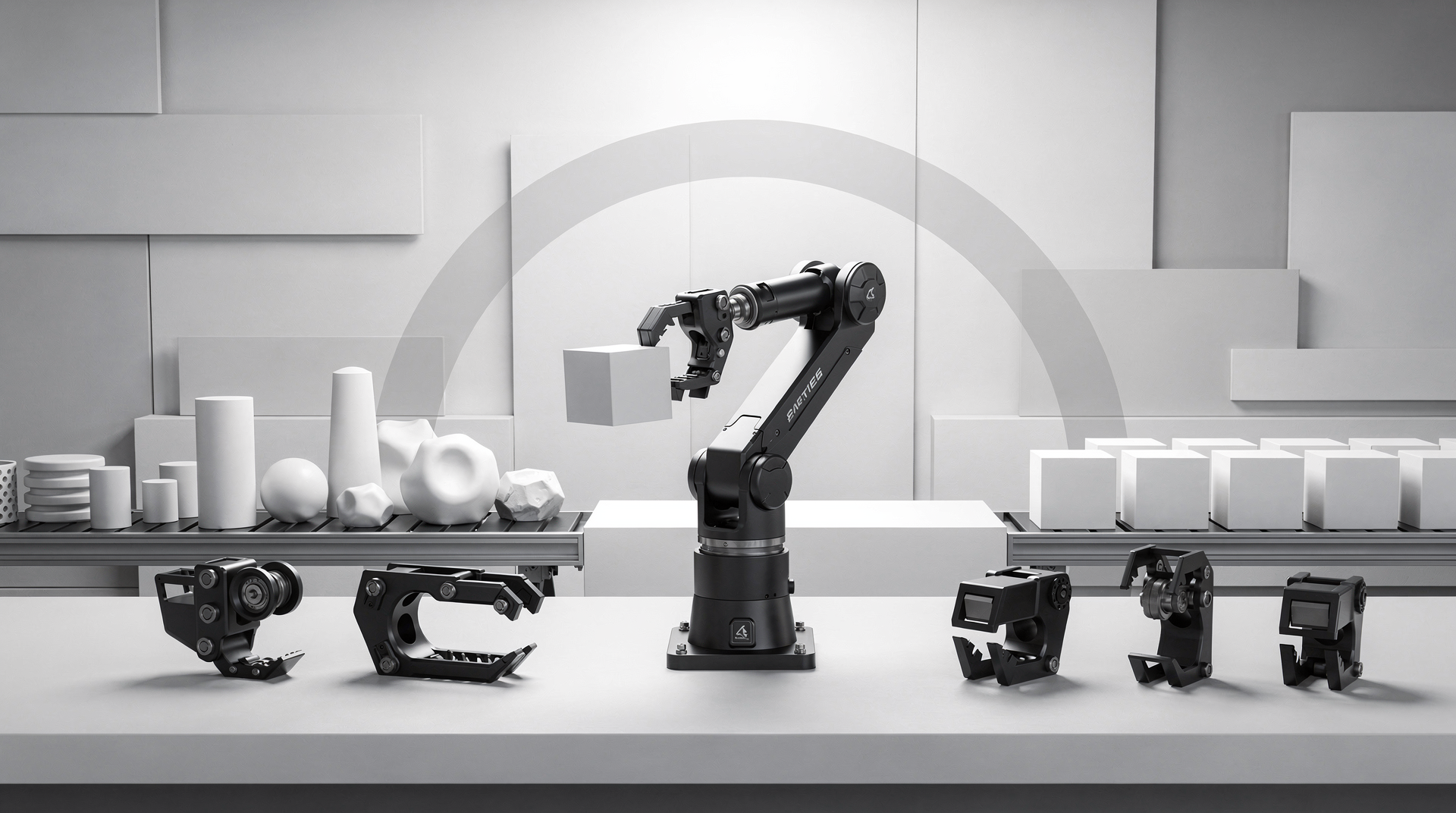
Robotic grippers serve as the critical interface between automated systems and the physical environment, where the geometry of the end-effector dictates the success of every pick-and-place operation. OpenClaw provides an open-source modular framework that allows engineers to swap finger profiles, actuation methods, and sensor suites without the overhead of custom-machined monolithic grippers. This article examines the mechanical architecture of OpenClaw, the trade-offs between servo, pneumatic, and tendon-driven actuation, and the integration of feedback sensors. By understanding the tolerance stack-up, failure modes, and performance constraints inherent in modular designs, you can determine whether this platform suits your specific automation task or if a fixed-purpose gripper remains the safer choice for your production environment.
The Modular Architecture: Fingers, Mounts, and Interchange Points
OpenClaw decomposes the gripper into discrete, swappable subsystems: finger modules, a central palm plate, and a standardized wrist interface. By utilizing a common dovetail or bolt-pattern mounting system, the platform allows for rapid reconfiguration—such as switching from a two-finger parallel setup for rectangular blocks to a three-finger radial layout for cylindrical objects—without requiring a full system redesign. However, the primary hidden risk in this modularity is the accumulation of positional error. Every mechanical interface introduces a tolerance stack-up; while a monolithic gripper might offer repeatability within ±0.05 mm, a multi-point modular assembly can easily drift to ±0.5 mm or more due to microscopic play in the dovetail joints. If your application involves high-precision assembly, such as inserting pins into tight-tolerance holes, you must verify the repeatability of the entire stack-up under load rather than relying on the nominal specifications of the individual components. A practical rule: if your part clearance is less than 0.3 mm, avoid modular interfaces in favor of a single-piece, custom-machined finger set to ensure consistent alignment.
Actuation Options: Servo, Pneumatic, and Tendon-Driven Fingers
The choice of actuation defines the gripper’s force profile and operational environment. Servo-driven fingers are the most common, offering precise position control and seamless integration with standard microcontrollers, making them ideal for rigid parts where repeatability is paramount. Pneumatic fingers, typically utilizing soft silicone bladders, excel at handling fragile or irregular objects by conforming to the surface, though they necessitate an external air supply and complex valve control. Tendon-driven fingers provide the slimmest profile, allowing the gripper to reach into narrow, crowded workspaces, but they introduce significant hysteresis—where the cable stretch causes the finger’s return path to differ from its initial closing path. A non-obvious trade-off is the impact sensitivity of these systems: servo gears are prone to stripping under sudden shock loads, such as dropping a heavy part, whereas pneumatic systems naturally absorb energy through air compression. For instance, a warehouse robot picking varied grocery items should prioritize pneumatic compliance to prevent crushing, while a PCB assembly robot should stick to servo-driven rigid fingers to ensure the exact placement required for surface-mount components.
Sensor Integration: Force, Proximity, and Tactile Feedback
Integrating sensors into OpenClaw transforms a passive tool into an active, responsive system capable of detecting slip or object presence. Mounting channels within the finger modules allow for the installation of strain gauges, Hall-effect proximity sensors, and flexible tactile arrays. Strain gauges, when placed at the finger base, provide an indirect measurement of grip force, which is essential for "soft-touch" applications where the robot must hold an object firmly enough to prevent dropping but gently enough to avoid deformation. Proximity sensors offer a "pre-touch" capability, allowing the robot to slow its approach speed before contact, which significantly reduces the risk of collision damage. A common failure mode is the electrical noise introduced by long cable runs from the gripper to the controller; if you are using high-impedance strain gauges, ensure your signal wires are shielded and kept away from motor power lines to prevent erratic force readings. For example, a lab-automation setup using tactile arrays can detect the center of mass of a vial by analyzing the pressure distribution across the finger pads, a task impossible with simple position-based control.
Performance Constraints and Failure Modes
Modular grippers are not a universal solution, and their performance is often limited by the structural rigidity of the connection points. Under high-speed operation, the vibration induced by rapid robot movement can cause modular fingers to oscillate or shift, leading to "gripper chatter" that degrades cycle times. Furthermore, the weight of the modular interface itself adds to the total payload of the robot arm, which can limit the maximum acceleration of the entire system. When designing for OpenClaw, always account for the "moment arm"—the distance from the wrist mount to the object being gripped—as this determines the stress on the modular joints. A common mistake is over-extending the fingers to reach deep into a bin, which exponentially increases the torque on the palm plate and can lead to mechanical fatigue or joint failure over thousands of cycles. If your application requires high-frequency, high-acceleration movement, consider using a lightweight carbon-fiber or 3D-printed reinforced polymer for the finger modules to minimize inertia, and always perform a stress analysis on the palm plate if you intend to grip objects weighing more than 500 grams at full extension.
Conclusion: When to Choose Modular vs. Fixed
The decision to implement an OpenClaw modular gripper depends on the volatility of your task requirements. If your production line handles a high mix of products with varying geometries, the ability to reconfigure the gripper in minutes provides a massive advantage in flexibility and cost-efficiency. However, if your process is high-volume, high-precision, and stable, the extra complexity and potential for positional drift in a modular system represent unnecessary risks. Fixed, custom-machined grippers will always outperform modular ones in terms of repeatability, structural rigidity, and long-term reliability. Use OpenClaw for prototyping, low-to-medium volume production, or research environments where the ability to iterate on finger design is more valuable than absolute precision. By carefully evaluating your tolerance requirements, the fragility of your parts, and the workspace constraints, you can leverage the modularity of OpenClaw to build a versatile end-effector that adapts to your evolving automation needs without the cost of bespoke engineering.